For the past decade, the 1,600-foot stretch of the Blind Brook that winds through the Rye Nature Center has been a source of growing concern—and, at the same time, a place of daily wonder. The brook’s brackish water supports a rare estuarine mix of flora and fauna that shows up in every season. Herons stalk the shallows. Migrating American eels slip through shallow waters on their long journey. Students and families pull out a seine net and discover a busy world of macroinvertebrates that tell us whether the ecosystem is still working the way it should.
But more frequent, more intense rain events have disrupted the balance. The floodplain that once absorbed overflow now floods harder and more often, making the riparian forest floor less and less hospitable. Each spring, the native annuals that should appear along the stream edge struggle to return. In their place, invasive lesser celandine spreads like a green blanket, taking advantage of disturbed soil and repeated inundation. And when the water rises fast and moves faster, it tears at the banks, carrying muddy sediment downstream—one storm at a time.
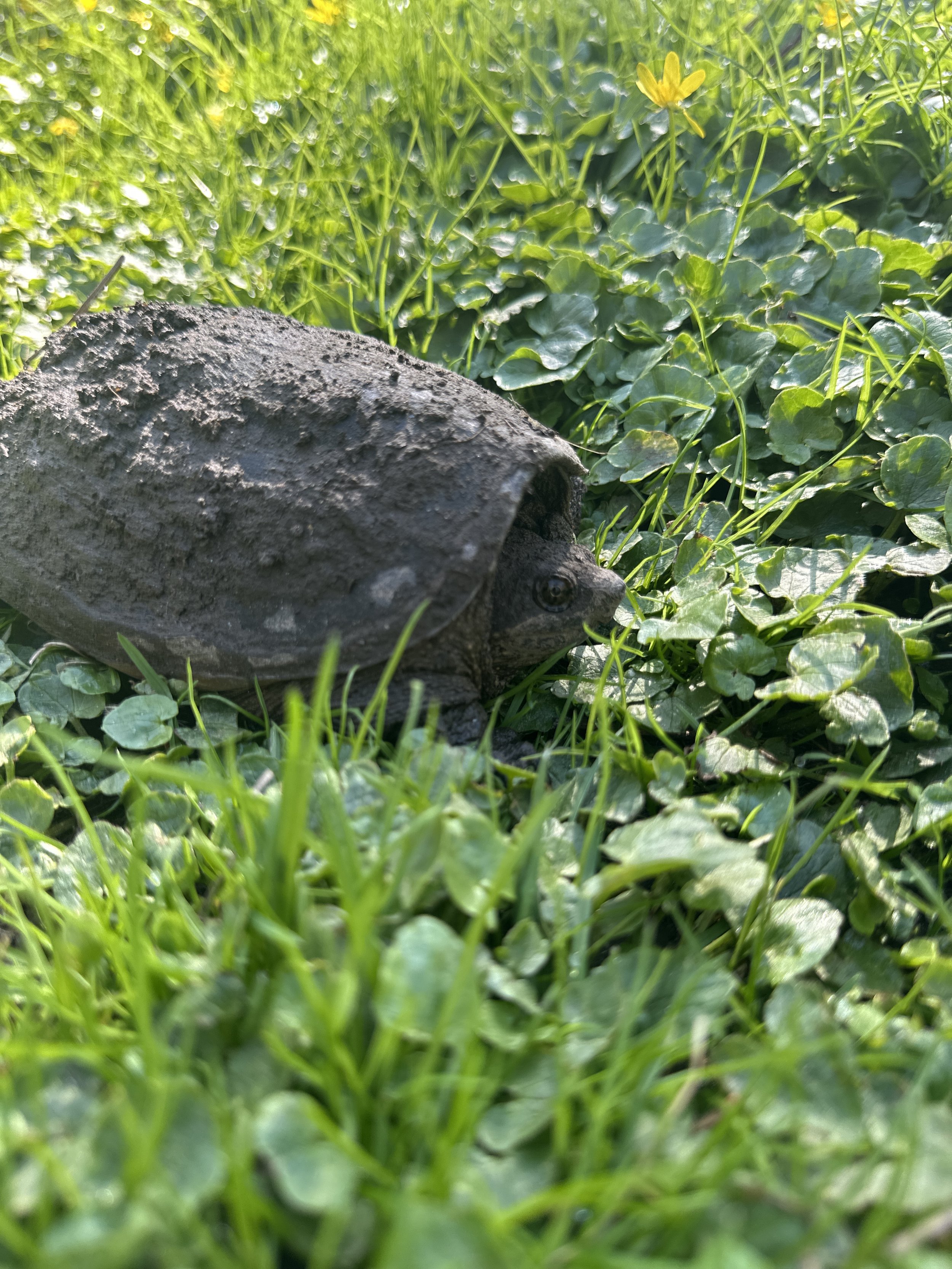
A baby snapping turtle hides in lesser celandine. While the turtle belongs here, the plant does not: this invasive spring bloomer crowds out native wildflowers
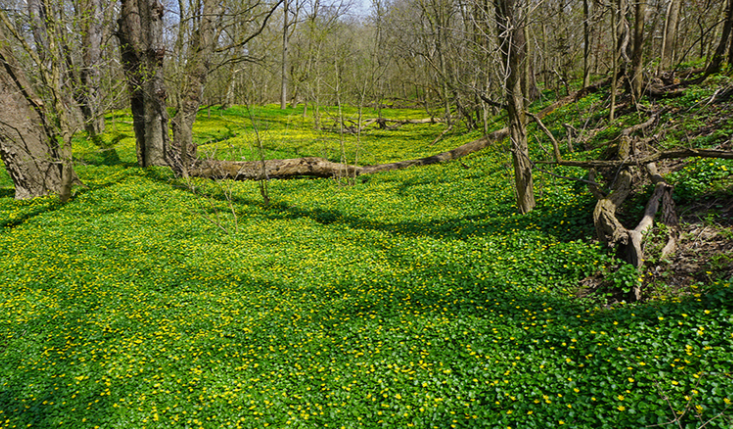
Lesser celandine spreads quickly in our area, forming dense, mat-like patches that crowd out native wildflowers.
This active pattern of erosion, habitat loss, and sediment moving toward Long Island Sound are the issues the Blind Brook Riparian Restoration Project is designed to address. The project restores the riparian corridor and reconnects its floodplain, creating a natural buffer that slows floodwater, anchors soil, and filters runoff before it reaches the stream. When that buffer is healthy, the brook has room to move without destroying its own edges. When it’s weakened, every flood does more damage than the last.
This is what the Rye Nature Center’s Blind Brook riparian looked like in Fall 2025.
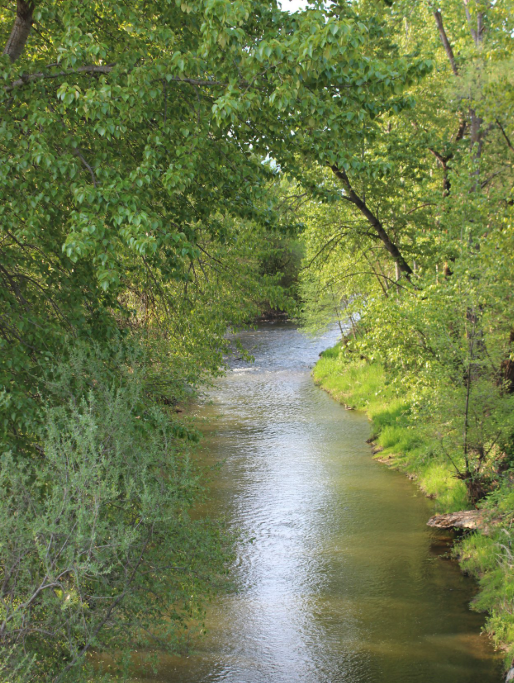
This is what a healthy riparian should look like.
The restoration plan brings the system back into balance through wetland enhancements that store and slow water, stream bank repairs that stop ongoing collapse, and large-scale native plantings that rebuild habitat from the ground up. Together, the work enhances more than two acres of wetland habitat and reduces sediment traveling downstream into Long Island Sound by about 160 tons.
This moment is possible because the groundwork is already done. Since 2022, Friends of Rye Nature Center (FRNC) advances planning, design, and permitting with Barton & Loguidice, supported early by the Long Island Sound Stewardship Fund and the New York Community Trust – Westchester Division, alongside earlier support from the Long Island Sound Futures Fund. Now implementation is fully funded by $723,631 from the New York State Department of Environmental Conservation (Water Quality Improvement Program) and $443,166 from the National Fish and Wildlife Foundation’s Long Island Sound Futures Fund.
With funding and permits aligned, FRNC targets late summer to early fall 2026 to begin construction and planting—so the Blind Brook’s riparian corridor and floodplain can function the way nature intended, even when the next big storm arrives.